A Calm-Down Evening Routine for Sleep After Menopause Using Only What’s Already in Your Home


It is 2:07 a.m. You kick off the blanket because you are hot. Twenty minutes later you pull it back because you are cold. By 3:00 you are wide awake, counting how few hours are left.
A calm-down evening routine for sleep after menopause will not fix every night. It can give your body a clear signal that the day is over.
This guide walks you through nine small steps, starting 90 minutes before lights-out. Everything comes from your own closet, kitchen and bedroom. You do not need to buy a thing.
Plan on about 90 minutes each evening. Only about 30 minutes of that is hands-on. The rest is sitting in a dim room with a warm mug. The steps are low effort. The hard part is doing them again tomorrow, so try one full week before you decide if it works.
Here is why it works. Sleep comes easier when your body cools down, the lights go low, and your mind has nowhere left to keep a to-do list.
Each step below handles one of those three things. If poor sleep goes on for weeks, or hot flashes are severe, tell your doctor. This routine is a comfort plan, not medical care.
Pull List
Night Timeline
Start your calm-down evening routine with a 90-minute alarm

Choose your lights-out time first. Pick one you can keep at least 5 nights out of 7, even on weekends. Count back 90 minutes and set a repeating phone alarm for that time.
Label it “Wind down” so it reads like a note from a friend, not a nag. A steady start time teaches your body when evening begins. Pick a time you cannot keep, and the whole routine falls apart by Thursday.
Switch off the overhead light and keep one lamp on
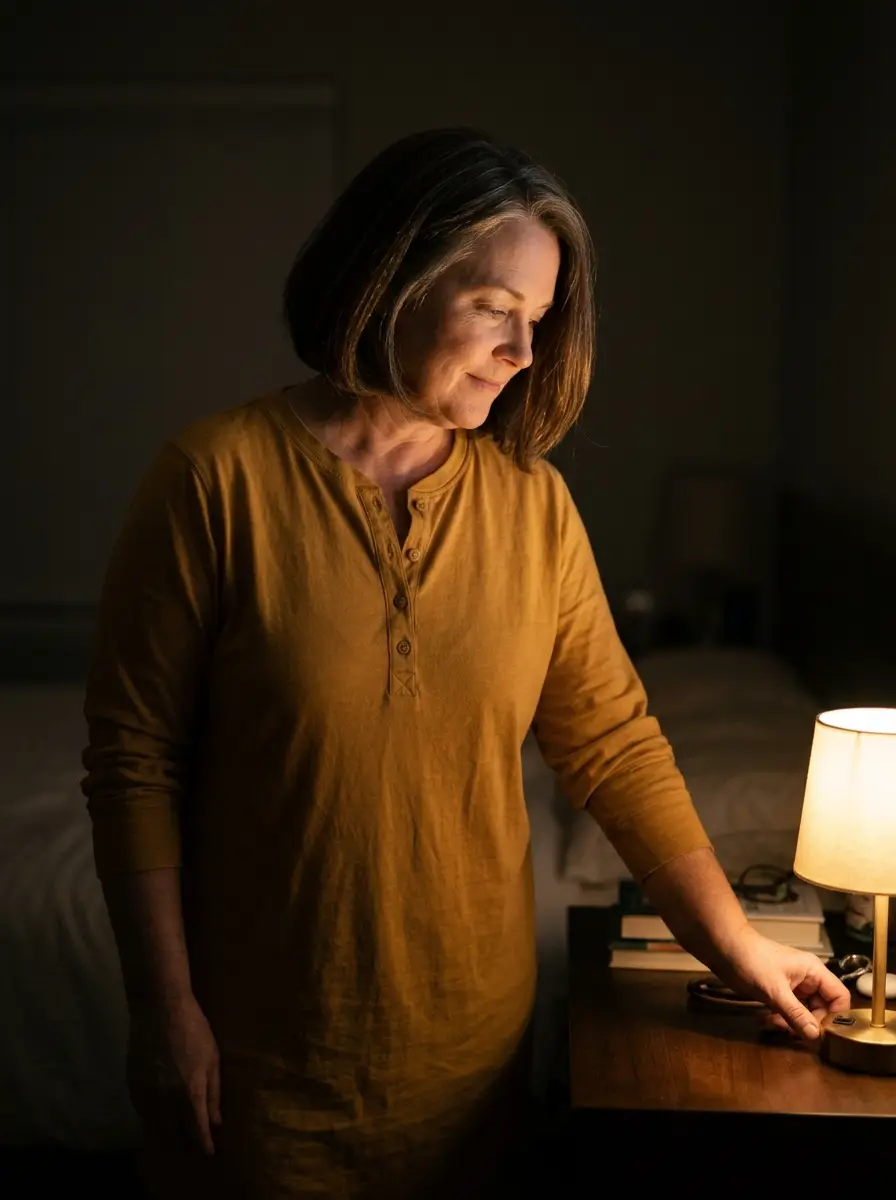
A bright ceiling light tells your brain it is still afternoon. Leave one lamp on, set lower than your eyes, like on a side table or the floor.
Warm, yellow bulbs work best. No warm bulb? Turn the lamp so the light points at the wall instead of at your face.
Cool the bedroom to about 65°F before you get in
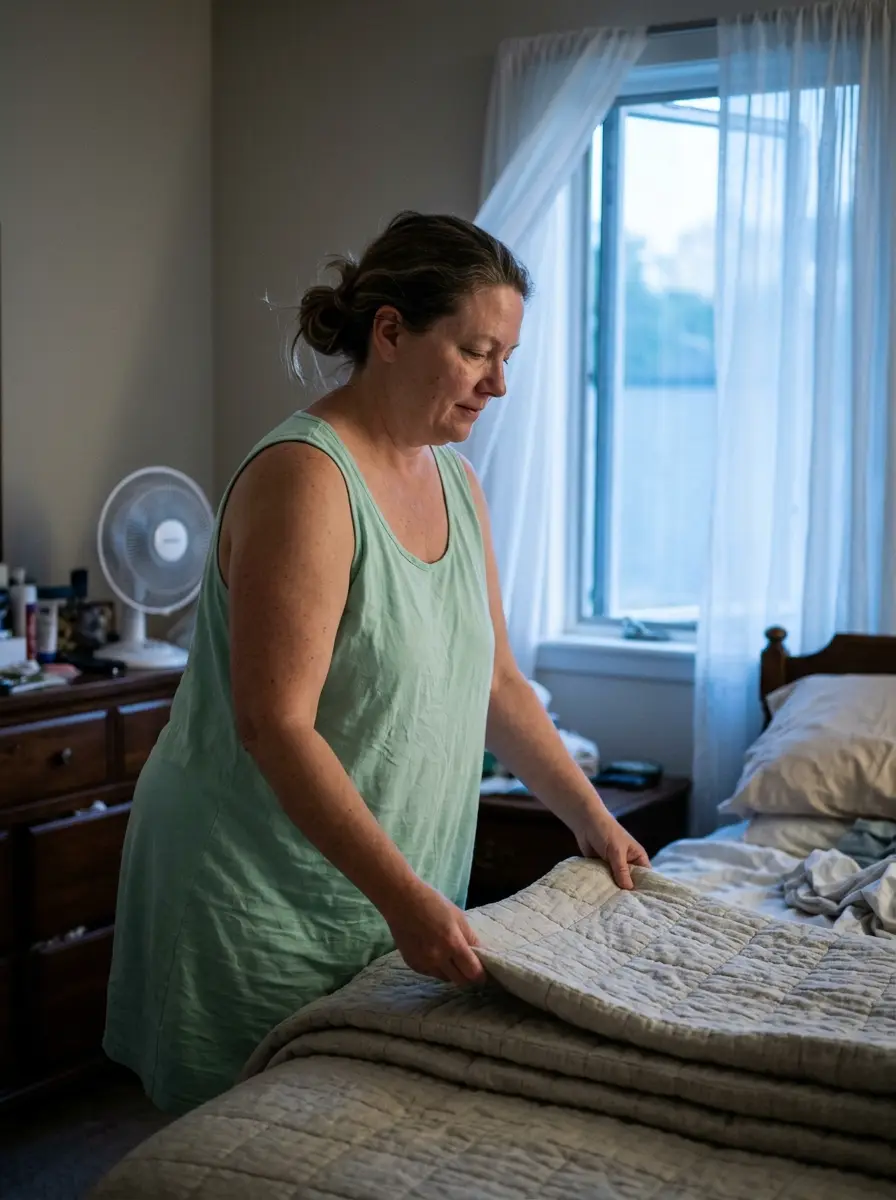
Your body temperature drops on its own as you fall asleep. A cooler room helps that drop happen, which matters when night sweats wake you.
Do all four of these before moving on:
- Set the thermostat to 65°F, or aim a fan at the bed
- Crack a window if the night air is cool
- Fold the heavy comforter down to the foot of the bed
- Set a glass of cold water within arm’s reach
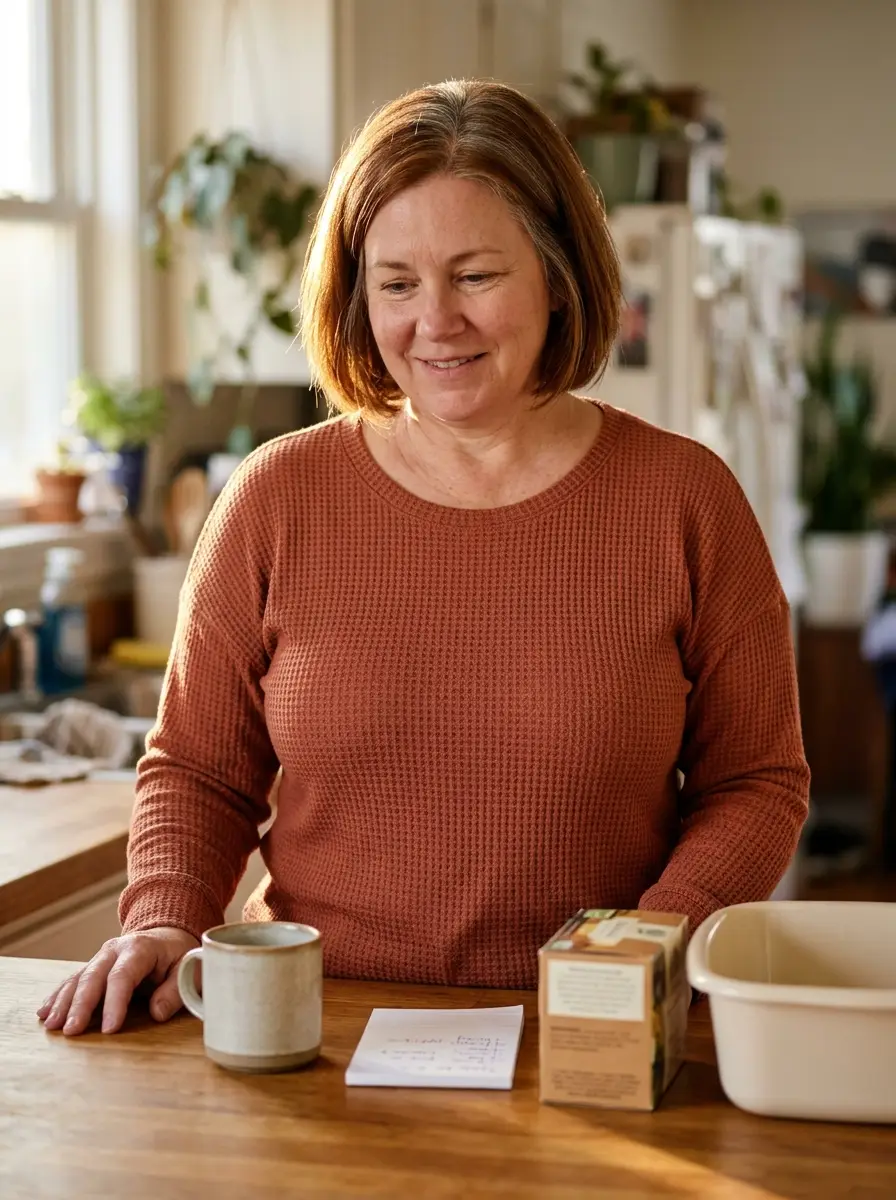
Brew a caffeine-free tea and drink it slowly
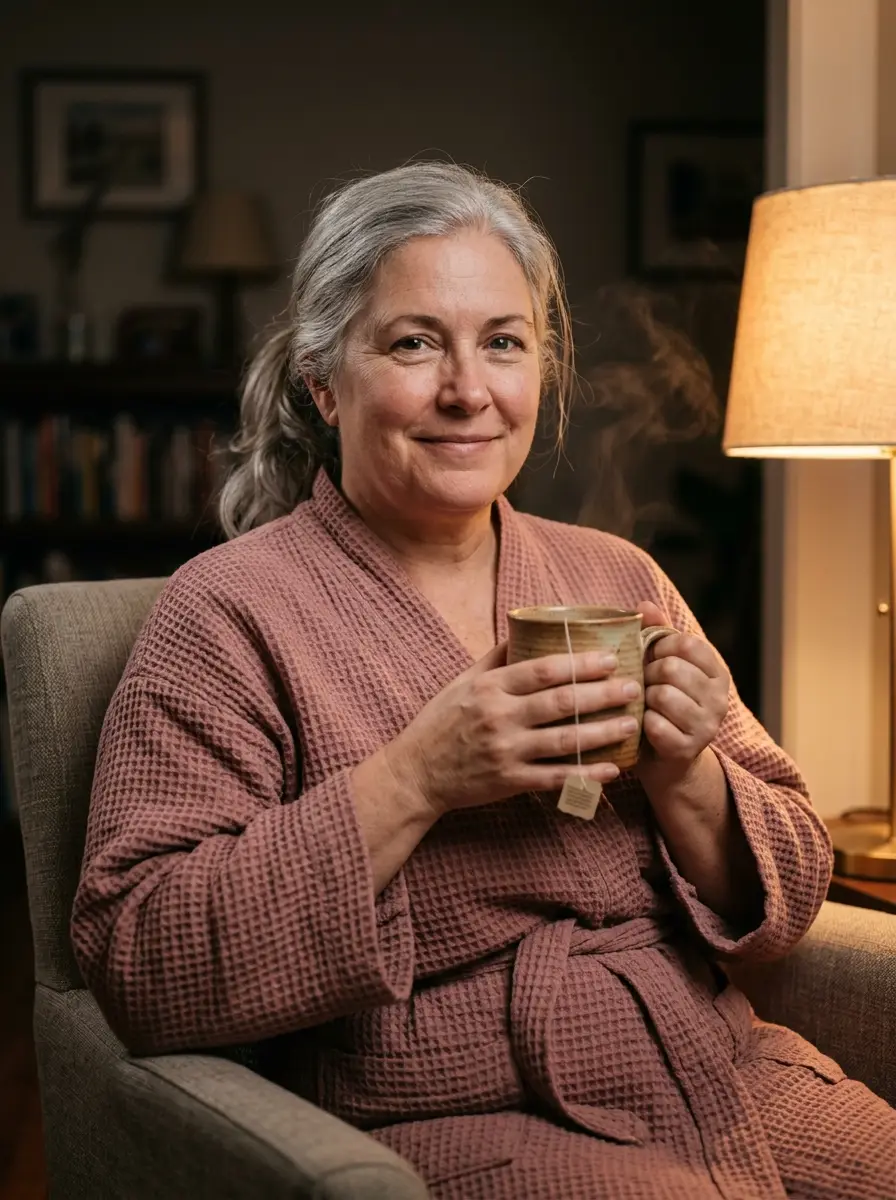
If the box says black, green or matcha, put it back. Those all contain caffeine. Reach for chamomile, peppermint or rooibos instead.
Steep one bag in 8 ounces of hot water for 5 minutes, then carry the mug to your lamp and sip for about 20 minutes. Set the phone face down while you drink. Finish the mug by 9:10 so you are not up at 2 a.m. looking for the bathroom.
Soak your feet in warm water for 10 minutes

Ten minutes is the whole step. Fill the dishpan with water that feels warm, not hot, around 100°F, deep enough to cover your ankles. Warm feet can help your body let go of heat once you are out of the water.
If your feet are numb, test the water with your elbow first, since you may not feel a burn. Pat dry between your toes before you stand up.
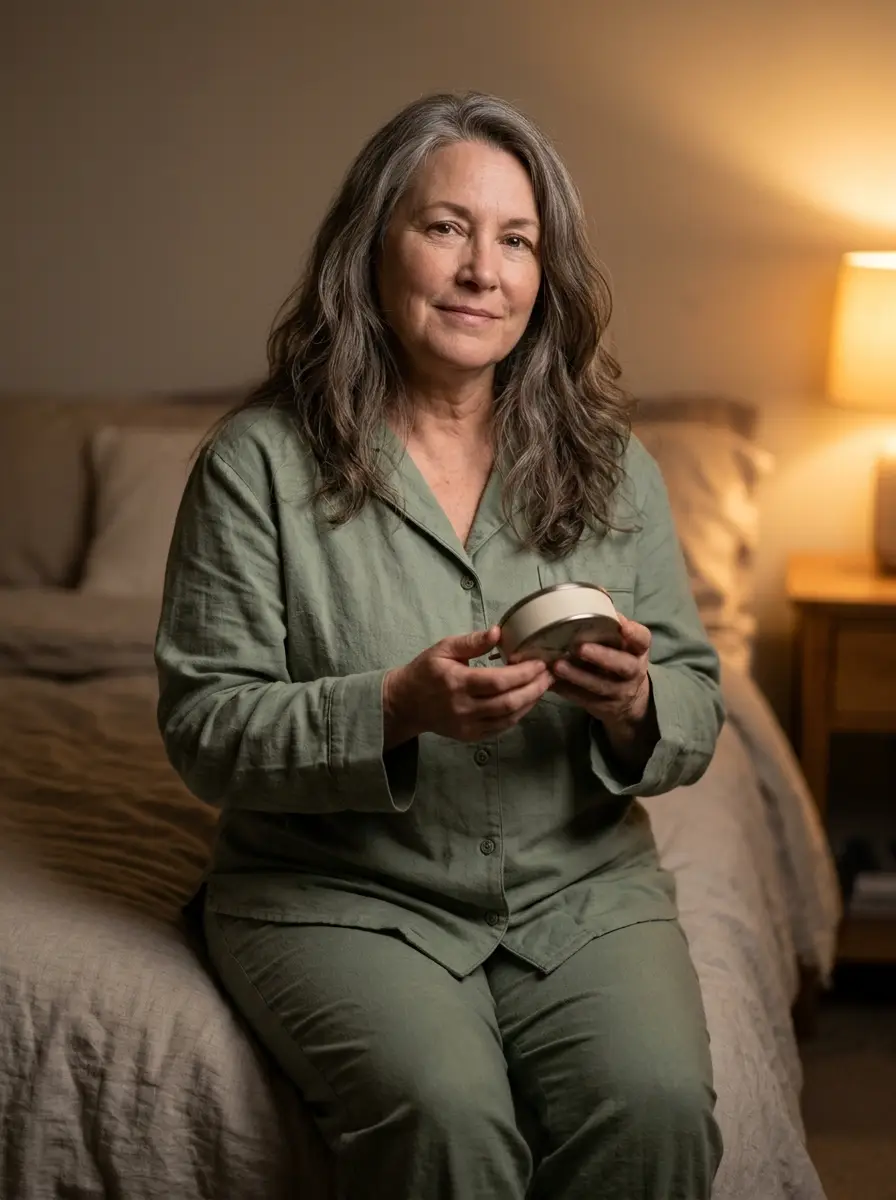
Slip into the lightest cotton nightgown you own
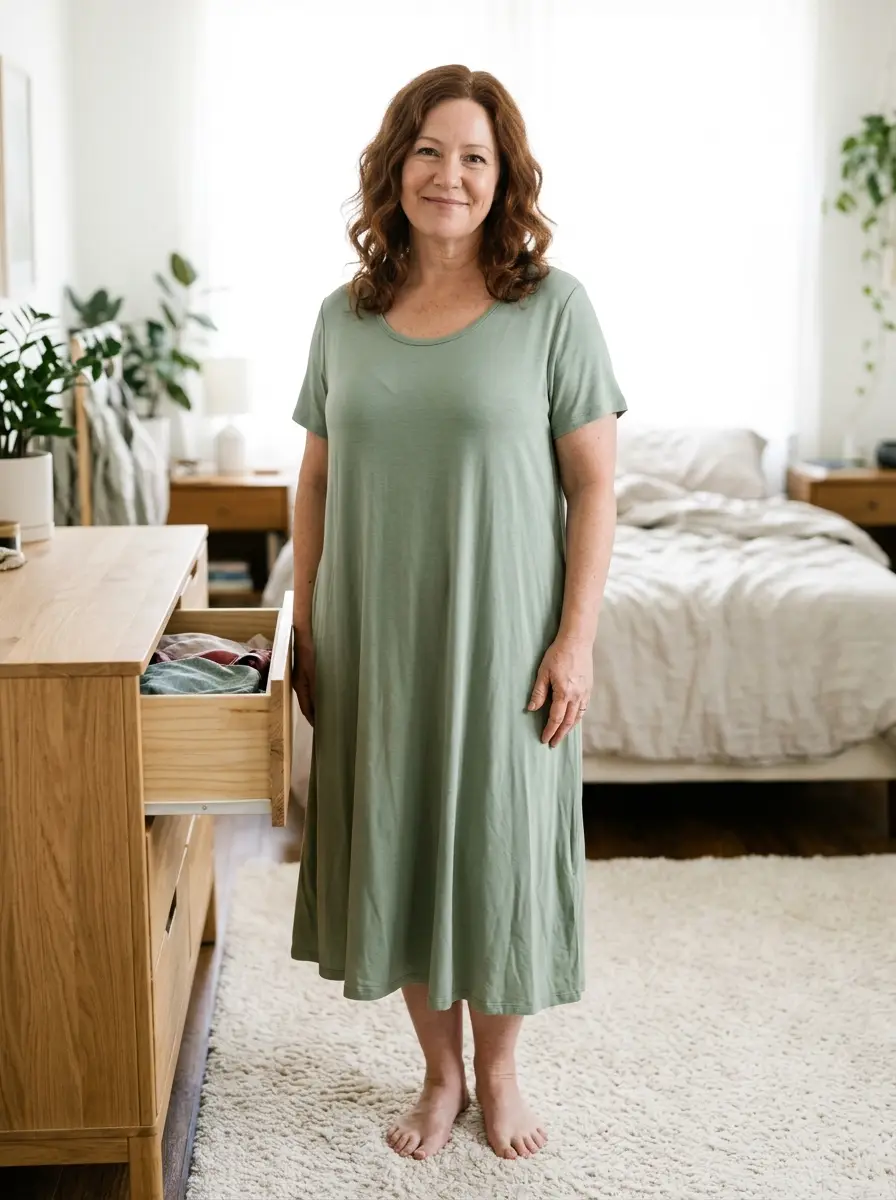
Open your sleepwear drawer and pull everything out onto the bed. Sort by fabric tag. Fleece, flannel, satin and polyester hold heat, so set those aside for now.
Then check the ones left against this list:
- Tag says cotton, bamboo or modal
- Hem lands between your knee and mid-calf, so it cannot twist around your legs
- Armholes and bust are loose enough that nothing clings when you sweat
- Bra is off, and no tight waistband is left on
No gown that passes? A loose cotton T-shirt, one size up, works fine.
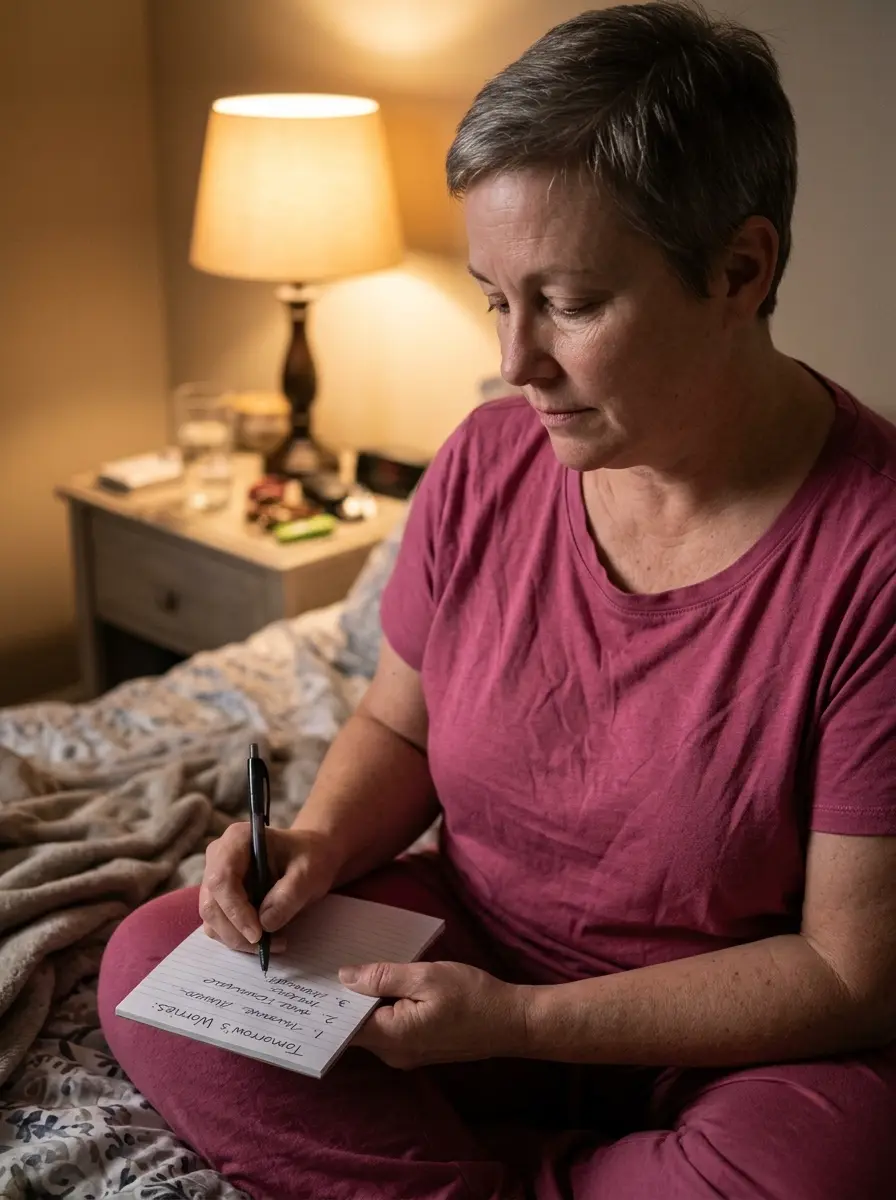
Write tomorrow’s three worries on paper
Grab the notepad and set a timer for 5 minutes. Your brain keeps looping on unfinished business because it is afraid you will forget it.
Writing it down hands the job to the paper. Write three worries or tasks, and next to each one a single small next step, like “call the pharmacy at 9.” Stop at three.
A full to-do list turns this into work, and work wakes you up. No notepad? The back of an envelope does the same job. Close the pad when the timer rings and set the pen on top.
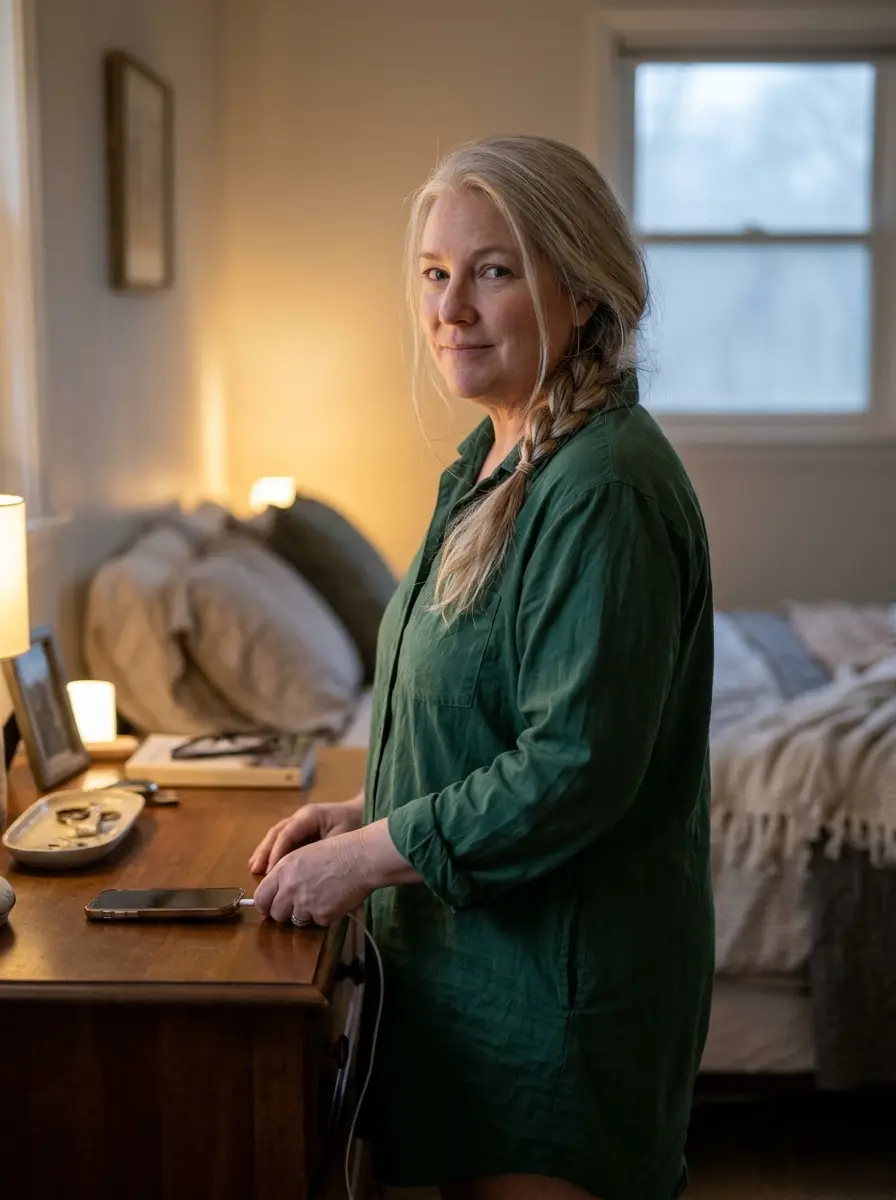
Park your phone across the room, plugged in
Is your phone the last thing you touch before sleep? Plug it in on a dresser or shelf where you cannot reach it from bed. Screen light and bad news keep the brain switched on, and one scroll at 3 a.m. can cost you 20 minutes.
Leave the alarm on so you still wake on time. If you need to see the clock at night, use a small bedside clock turned away from your face.
Breathe out longer than you breathe in
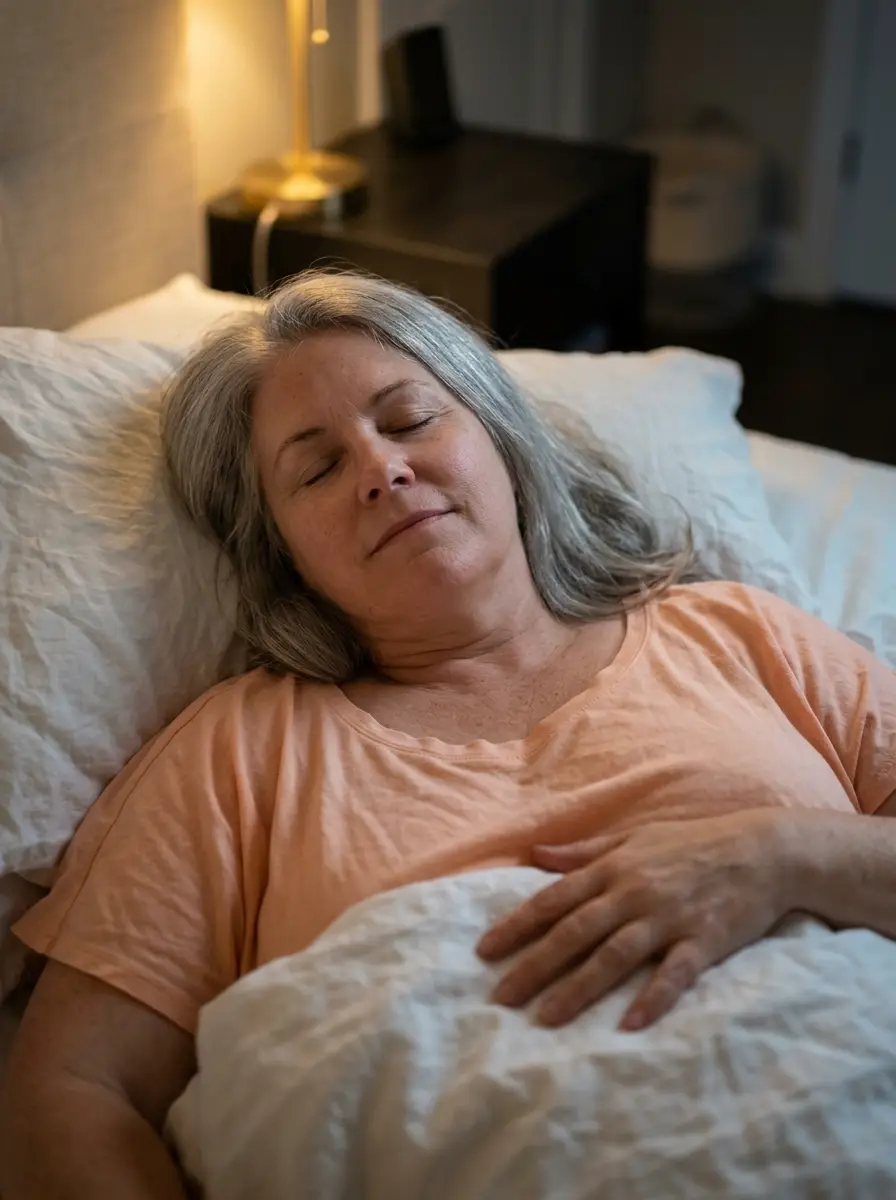
Slow breathing costs nothing and needs no gear, which is why it comes last. Get under the covers on your back or side, and rest one hand on your belly so you can feel it move.
Then follow this pattern:
- Breathe in through your nose for a count of 4
- Breathe out through your lips for a count of 6
- Repeat for about 3 minutes, or around 18 rounds
The long exhale tells your body it is safe to slow down. If you feel dizzy, go back to normal breathing for a minute. If your mind wanders, pick the count back up where you lost it. Lights out at 10:00.
Troubleshooting Table
| If this happens | Try this |
|---|---|
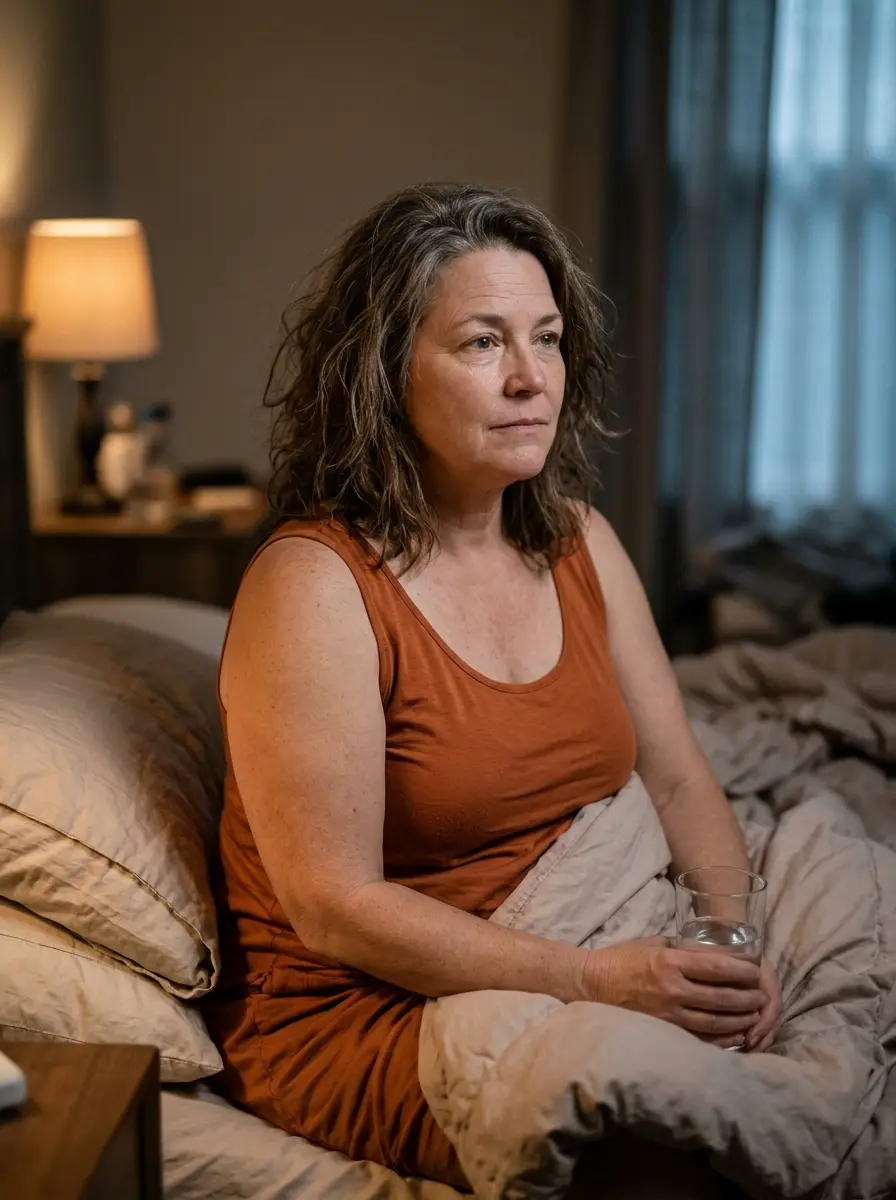
| You wake at 3 a.m. and your mind starts racing | Write one line on the bedside notepad, then repeat the 4-count in, 6-count out breathing for 2 minutes. Leave the phone where it is. If you are still awake after about 20 minutes, sit in the dim lamp light with a paper book until you feel sleepy. |
| A hot flash soaks your gown | Push off the top layer, sip cold water, and change into the backup gown at the foot of the bed. Aim the fan at your shoulders, not your face. |
| The tea sends you to the bathroom at 1 a.m. | Use a smaller mug, about 4 ounces, and finish it by 9:00. Stop all other drinks once the foot soak begins. |
| The foot soak leaves you feeling too warm | Cut it to 5 minutes and use cooler water, closer to 95°F. Finish at least 30 minutes before lights-out so your body has time to cool. |
| You only have 30 minutes tonight | Do the short version: one lamp, a cool room, three worries on paper, and 3 minutes of slow breathing. Skip the rest and go back to all nine tomorrow. |
Questions Women Ask About Winding Down:
What if I go to bed much later than 10:00?
Count back 90 minutes from your own lights-out time. The clock times in the guide are only an example. The order of the steps matters more than the hour.
Can I use decaf coffee instead of herbal tea?
Decaf still holds a small amount of caffeine. Herbal tea holds none, so it is the safer pick for the evening hours.
Can I take a warm bath in place of the foot soak?
Yes, if the water is warm rather than hot and you finish at least 1 hour before lights-out. A foot soak is quicker and leaves less heat for your body to shed.
My partner likes the bedroom warmer. What now?
Give each person a thin blanket of their own, and aim the fan at your side of the bed. Keep the room cool and let the blankets do the warming.
How many nights before I can tell if it is working?
Give it 7 nights in a row before you judge. Some women notice a change sooner. If nothing improves after 2 weeks, bring your notes to your doctor.
Conclusion

Try the Seven-Night Challenge
Here is your challenge for this week. Run the full calm-down evening routine for sleep after menopause for 7 nights in a row.
Stick a note on the bathroom mirror that says “Wind down.” Cross off each night on the calendar when you finish.
On night 8, look back. Did you fall asleep faster? Wake up fewer times? Keep the steps that helped, and change one thing you did not like, like the tea flavor or the foot soak time.
Save this pin to your sleep or self-care board so the clock-style timeline is in your pocket when the alarm goes off tonight.