
How to protect your memory in your 60s the everyday habits that help


Forgetting where you put your keys does not mean your memory is breaking down. Everyone loses a name or walks into a room and forgets why. What matters is the pattern, and the daily habits underneath it.
This guide of how to protect your memory in your 60s shows you nine everyday habits to protect your memory. Each one starts with a habit that quietly works against you. Then you get a swap you can try this week.
You do not need a gym, a special diet, or fancy gear. You need a notebook, a pair of walking shoes, and a little patience.
Why does this work? Your brain does best with steady care. Sleep, movement, hearing, blood pressure, and friendships all feed it a little each day. Small swaps add up faster than one big overhaul you drop by Friday.
Plan on about 30 minutes a day once you are rolling. Do not try all nine at once. Pick one, hold it for a few days, then add the next.
One honest note: this guide is not medical advice. If memory changes get in the way of daily life, like missed bills or getting lost on a road you know, call your doctor.
Small Things to Keep Nearby
Small Things to Keep Nearby
- A small notebook and a pen
- A wall calendar
- Comfortable walking shoes
- A small dish or tray for your keys
- A written list of every medicine and supplement you take
- A home blood pressure cuff, or a pharmacy that lets you check
- A phone with an alarm
Fix a bedtime that leaves room for 7 hours of sleep

Going to bed at a different hour every night leaves your brain no time to sort the day’s memories. Sleep is when that sorting happens.
Count backward from your wake-up time. If you get up at 6:30 a.m., lights out by 11:00 p.m. gives you a fair shot at 7 hours.
Then set up the evening:
- Set a phone alarm for 10:15 p.m. as your “wind down” reminder
- Dim the lights in the living room
- Charge your phone outside the bedroom
- Put out tomorrow’s list on the nightstand
Book a hearing check if you keep asking people to repeat themselves

If you turn the TV up a notch every few months, listen closely to that. When your ears miss sounds, your brain spends extra energy filling in the gaps, and that leaves less energy for storing what was said.
A basic hearing test takes about 30 minutes. Call an audiology clinic and ask for one.
Break up sitting with three short walks

Three walks of 10 minutes add up to 30 minutes a day, which matches common guidance for adults. Walking moves blood to your brain, and short walks are easier to keep than one long one.
Try one after each meal, at a pace where you can talk but not sing. If your knees complain, march in place beside the kitchen counter for 10 minutes and keep one hand on the counter for balance.
Park your keys, glasses and pills in one spot
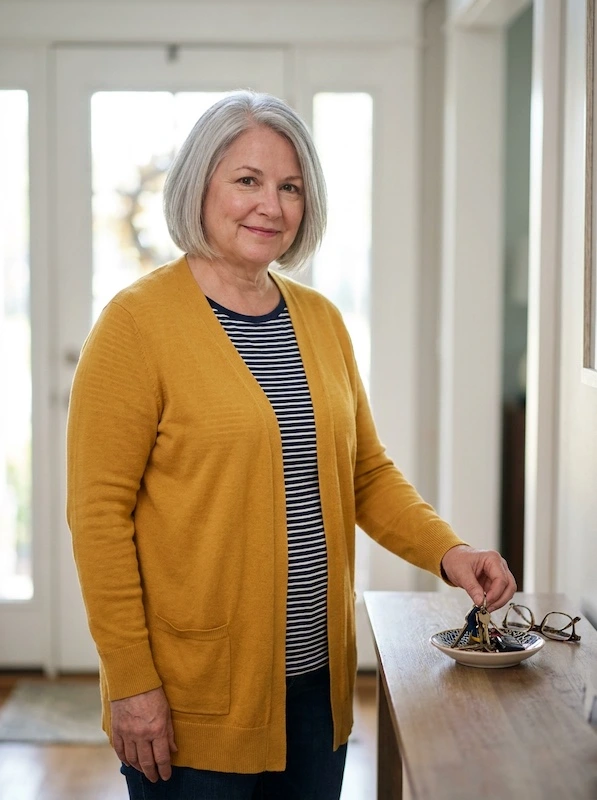
Do you hunt for your glasses every morning? Your memory is not failing. Those items just never had a fixed home.
Give each one a spot and use it every time:
- Keys: a dish by the front door
- Glasses: the same corner of the nightstand
- Pill box: next to the coffee maker
- Phone charger: one outlet in the kitchen
- Purse or wallet: a hook near your keys
A fixed spot means you never have to remember where things are. That saves your memory for harder jobs. No dish? A coffee mug works fine.
Call one friend this week, before you scroll
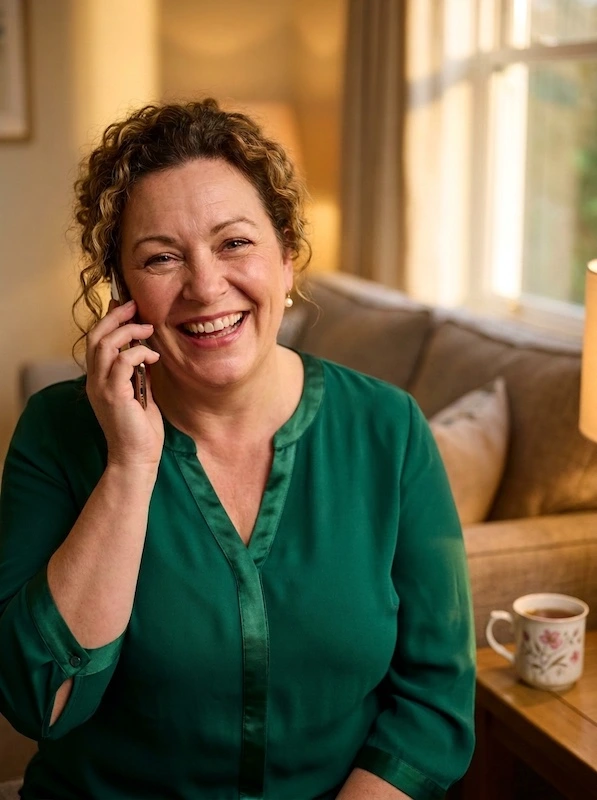
A text does not count the same way. A real conversation asks your brain to listen, recall, and answer all at once, and regular social contact is linked to better brain health in older adults.
Pick one friend and a day, then write the call on your wall calendar for 15 minutes. Set the time before you hang up. Plans like “we should talk soon” tend to fade away.
Check blood pressure at home for 7 days, even if your last reading was fine
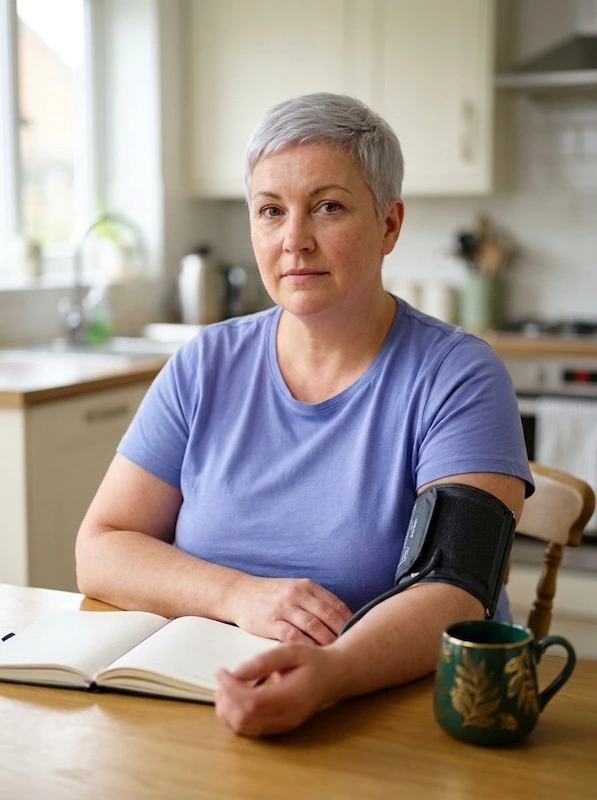
Before you buy a cuff, ask your pharmacist which size fits your arm. A cuff that is too small gives a falsely high number. High blood pressure is linked to a higher risk of memory problems later in life, and one reading in a busy office can miss the pattern.
Sit quietly for 5 minutes, feet flat and back supported, with your arm resting at heart level. Take two readings 1 minute apart, once in the morning and once in the evening.
Don’t talk or cross your legs while the cuff is working. No cuff? Many pharmacies have a free machine you can use.
Pro Tip
Make the Log Worth Bringing
Write each reading in your notebook with the date and time. Bring all 14 readings to your next appointment and ask your doctor what range is right for you.
Cut back the evening wine to protect your sleep and your memory

One standard glass of wine is only 5 ounces, and many home pours run double that. Alcohol can make you fall asleep faster, but it breaks up deep sleep later in the night, and that is when your brain files the day away.
Heavy drinking over many years is also linked to memory problems. Ask your doctor how much is safe for you.
For now, try swapping your usual glass for sparkling water with lemon or a warm herbal tea.
Keep the swap in the same chair, at the same hour, so the habit changes but the cozy moment does not.
Ask your pharmacist to review every pill and supplement you take

Some common medicines can cloud your thinking, and the risk can grow as the body changes with age. Certain sleep aids and allergy pills are examples.
Put every bottle, vitamin, and over-the-counter box in one bag and bring it to your pharmacy.
Ask this exact question: “Could any of these affect my memory or my sleep?” A pharmacist can check how your medicines interact, and a review like this usually takes about 15 minutes.
Heads Up
Never Stop a Medicine on Your Own
Some medicines are risky to stop suddenly, even if they seem to be causing a problem. Write down your concern, then let your pharmacist or doctor decide what to change and how.
Learn one small new skill for 15 minutes a day

Doing the same crossword you have done for years is comfortable, and comfort does not stretch your brain very much.
Something new and slightly hard asks it to build fresh connections, which is why a beginner skill can work better than a habit you already know by heart.
Pick one and keep it small:
- Learn 5 words in a new language each week
- Try a card game you have never played
- Cook one recipe with an ingredient you have never used
- Practice a simple tune on a keyboard or ukulele
- Learn the names of 3 new plants on your street
It should feel a little awkward at first. That feeling is a sign it is working. If a skill starts to feel easy, move on to the next level or a new one.
When a Swap Won’t Stick
When a Swap Won’t Stick
| What Gets in the Way | Try This |
|---|---|
| You wake at 3 a.m. and cannot fall back asleep | Get up and sit in dim light with a book for 15 minutes. Skip the phone and the clock. Go back to bed when your eyes feel heavy. |
| Rain, heat, or sore knees cancel your walks | Walk laps inside a mall or a long hallway. Or march in place for 10 minutes beside a counter for balance. |
| Keys and glasses still wander off | Stick a note at eye level by the door for 2 weeks. Ask family to return your things to the dish, not the couch. |
| Your blood pressure numbers jump around | Sit still for 5 minutes first, use the same arm, and test at the same times each day. Bring the log to your doctor and let them read it. |
| Your friend never calls back | Try a second friend, or join a weekly class or club. A set time with a group is easier to keep than a loose plan. |
FAQ’s: Questions Women in Their 60s Ask About Memory
Is forgetting a name normal in my 60s?
An odd slip now and then is common. Call your doctor if forgetting gets in the way of daily life. Examples are missed bills, repeating the same question, or getting lost on a familiar road.
Do brain-training apps work?
Research on apps is mixed. Better bets are real-life habits like sleep, walking, and learning something new with other people.
Will a hearing aid protect my memory?
Studies link untreated hearing loss with a higher risk of memory problems, and research on treating it is still growing. A hearing aid also helps you follow talk and stay social, and both help your brain.
Should I buy a memory supplement?
Proof that most of them work is weak, and some can clash with your medicines. Ask your pharmacist before you spend money.
Which swap should I start with if I have energy for only one?
Start with your bedtime. It costs nothing, and better sleep makes the other swaps feel lighter.
Your Pocket Memory Plan
Your Pocket Memory Plan
Screenshot this and keep it on your phone.
Keep Nearby
- Notebook and pen
- Wall calendar
- Walking shoes
- Key dish
- Written medicine list
- Blood pressure cuff or pharmacy access
- Phone alarm
The 9 Swaps
- Set a bedtime that leaves 7 hours of sleep
- Book a hearing check
- Walk 3 times a day for 10 minutes
- Give keys, glasses and pills one home
- Call one friend for 15 minutes
- Log blood pressure for 7 days
- Cut back evening wine
- Ask your pharmacist to review every pill
- Learn something new for 15 minutes a day
Conclusion
You now have nine swaps, and none of them needs a gym or a big budget. Everyday habits to protect your memory in your 60s work best when you start small and keep going.
Here is your challenge for this week. Pick one swap from the list and try it for 7 days. Mark each day on your wall calendar with a check.
When the week ends, add a second swap. If you want to come back to this plan, save this pin to a board you check often, so the nine swaps are one tap away.