
Women Who Sleep Deeply After Menopause Share These 8 Evening Habits


Your body temperature must drop by roughly 2 degrees Fahrenheit every single night to initiate deep, restorative slumber. During menopause, fluctuating estrogen levels hijack your body’s internal thermostat, turning a standard 1-degree shift into hot flashes, sudden chills, and broken rest.
Women who sleep deeply after menopause share these 8 evening habits to systematically remove physical tension, cool internal heat, and cushion midlife joint pressure.
By adjusting your surroundings and evening prep starting at 7 PM, you can bypass hormone-driven wakefulness and stay asleep until morning.
1. Vascular Cooling (Glycine)
3g glycine before bed triggers limb vasodilation, rapidly cooling core temperature to deepen sleep without morning fatigue.
2. Cortisol & Glucose Balance
Estrogen drops destabilize insulin. A small protein snack at 8:30 PM prevents midnight glucose dips that trigger 3 AM awakenings.
3. Upper Airway Tone
Lower progesterone weakens airway muscles. Targeted tongue/palate exercises and side-sleeping reduce nighttime apnea disruptions.
4. Estrobolome & S-Equol
Gut microbes convert soy daidzein into S-Equol to calm the hypothalamus. Pair fermented soy with prebiotic fiber for hot flash relief.
Set your bedroom thermostat to exactly 65 degrees at 7 PM

Cooling the room air well before bedtime signals your brain that night has arrived. Lowering ambient temperature prevents the sudden spike in heart rate that triggers nocturnal hot flashes.
- Lower thermostat to 65°F (18°C).
- Turn on a ceiling fan at low speed to keep air circulating.
- Close thermal curtains to block out residual outdoor heat.
If central AC is unavailable, place a box fan on a stable chair 3 feet away from your bed, angled across your body rather than directly at your face.
Trade tight elastic waistbands for loose bamboo loungewear

Tight waistbands press against a bloated evening abdomen, irritating abdominal nerves and raising core body temperature while resting.
Switching to breathable fabrics reduces surface friction against delicate skin. Look for drawstrings or soft flat bands that sit gently below the waist.
Sip four ounces of warm tart cherry juice two hours before bed

Tart Montmorency cherries contain natural melatonin and procyanidins that encourage muscle relaxation.
Drink 4 ounces unflavored juice mixed with 2 ounces warm water at 8 PM. Consuming liquid two full hours before sleep ensures your bladder empties completely before lights-out, cutting down midnight bathroom trips.
Elevate your knees with a dense contour cushion
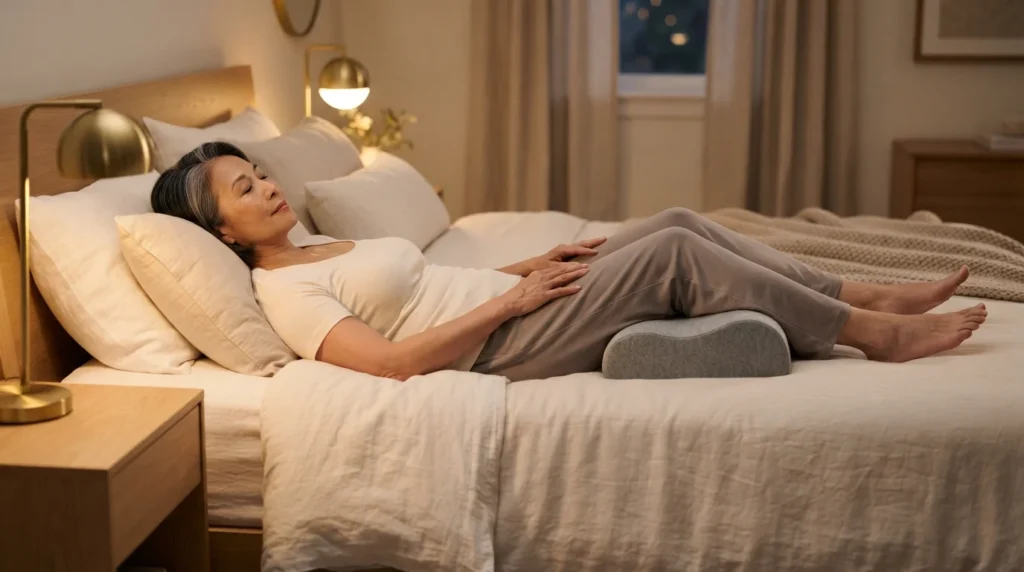
Lying completely flat places direct stress on the lower back and pulls on tight hip flexors, especially for petite frames carrying midlife weight shifts around the torso.
Placing a firm cushion directly beneath your knee joints aligns the lumbar spine instantly, relieving pressure that often wakes sleeping muscles at 2 AM.
- Slide a dense, 5-inch memory foam contour pillow under both knees.
- Adjust position until your legs rest comfortably at a slight 15-degree bend.
- Verify that your ankles float comfortably without digging into the mattress.
Ditch heavy duvets for three breathable cotton layers

A thick down comforter traps trapped body heat with nowhere to escape, forcing you to kick off all covers and suffer through sudden chills moments later.
Layering thin, natural-fiber textiles creates adjustable air pockets you can manage without waking fully.
Start with a crisp fitted sheet, add a lightweight 100% cotton percale top sheet, and top with a breathable waffle-weave cotton blanket.
When a hot flash strikes, simply flip back the top blanket while keeping the light sheet in place to keep your skin protected from drafts.
Apply a lavender magnesium lotion to your lower legs

Magnesium absorbs efficiently through skin tissue, relaxing twitchy calf muscles and soothing restless leg sensations common during perimenopause and menopause.
Dispense 2 pumps (roughly 1 teaspoon) of topical magnesium lotion into your palms, then rub firmly starting at your ankles and working upward toward your knees for 2 minutes.
(If you experience sensitive skin or tingling, mix the lotion half-and-half with a plain unscented aloe gel).
Dim all overhead light fixtures ninety minutes before sleeping
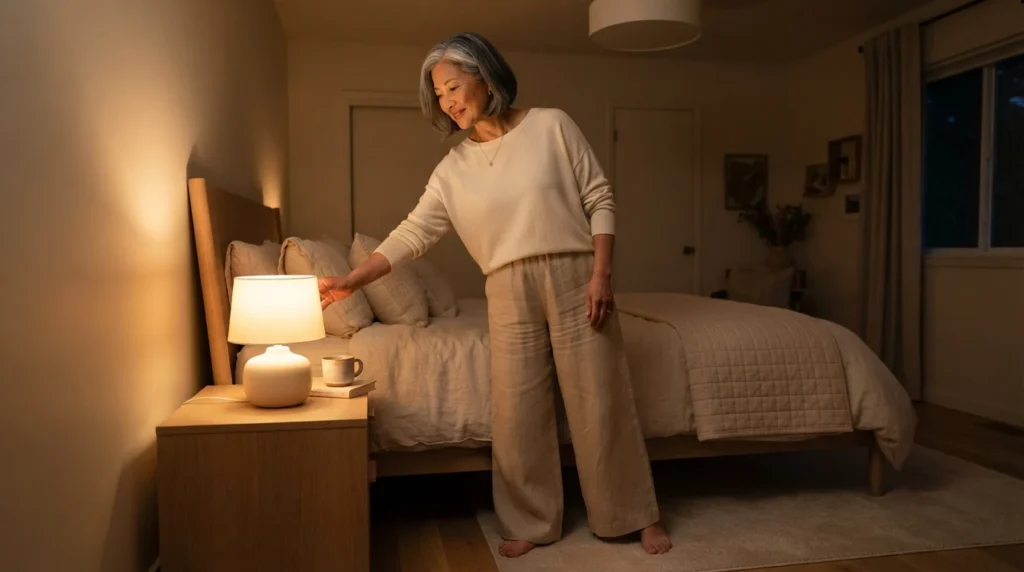
Harsh overhead bulbs mimic midday sun, suppressing your natural melatonin production just when menopausal body changes already disrupt sleep signals.
- Switch off main ceiling lights at 9:00 PM.
- Turn on low-wattage warm bedside lamps (2700K color temperature or lower).
- Position light sources below eye level to prevent direct light from hitting your retinas.
Power down active electronics and place your phone across the room
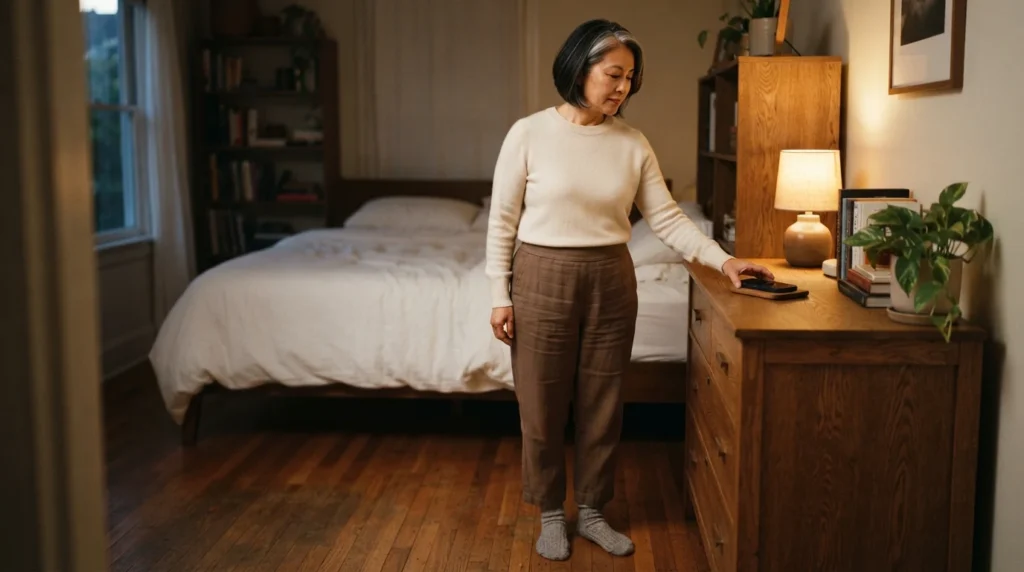
Blue light emitting from phones and tablets keeps your brain in an alert state, making it harder to drift back to sleep if you wake during a midnight thermal spike.
At 9:30 PM, set your phone to silent mode and plug it into a charger at least 8 feet away from your mattress.
Placing the device out of arm’s reach eliminates the urge to scroll through middle-of-the-night wakeful periods, allowing your mind to reset and drift off naturally.
QUICK REFERENCE CARD & CONCLUSION
Quick Reference Checklist
Evening Protocol- 7:00 PM: Set bedroom thermostat to 65°F (18°C) & fan on low.
- Loungewear: Switch to loose bamboo fabrics with flat waistbands.
- 8:00 PM: Drink 4 oz tart cherry juice + 2 oz warm water.
- Bed Prep: Elevate knees with a 5-inch memory foam cushion.
- Bedding: Use 3 cotton layers instead of a single heavy duvet.
- Topical: Apply 2 pumps magnesium lotion to lower legs.
- 9:00 PM: Dim overheads; use warm bedside light (<2700K).
- 9:30 PM: Power down electronics & charge phone 8ft away.
Applying these physical shifts removes the thermal and mechanical barriers that trigger nocturnal wakefulness. Wake up feeling fully restored, clear-headed, and energized for your day.
Focus on adjusting your bedroom temperature first, as cooling your environment lays the foundation for every other habit to work.