How to start walking for health at 65 when you haven’t exercised in years

The sneakers were still in the box at the back of my closet, tags and all. I laced them up, walked to the end of my street, and turned around with a blister the size of a quarter.
That was my first try. My second try ended when my waistband rolled down and my thighs rubbed raw before I reached the corner.
If you want to start walking for health at 65 after years of doing nothing, small problems like these are what stop you. Willpower is rarely the issue.
This guide fixes them one at a time, in order, so your first walk feels fine and your tenth walk feels normal.
You will start with a 10-minute walk and build to 30 minutes over about four weeks. Along the way you will check your shoes, choose clothes that do not rub, find a flat loop near your door, and learn a simple way to know your pace is right. Every step tests something, then adjusts it.
The work is gentle. The hardest part is week one, so we keep that week short and kind to your feet.
Grab your sneakers and a notepad. We start with a phone call.
Pull These From Your Closet Before Day One
- The sneakers you already own (a new pair comes later, if needed)
- The socks you plan to walk in
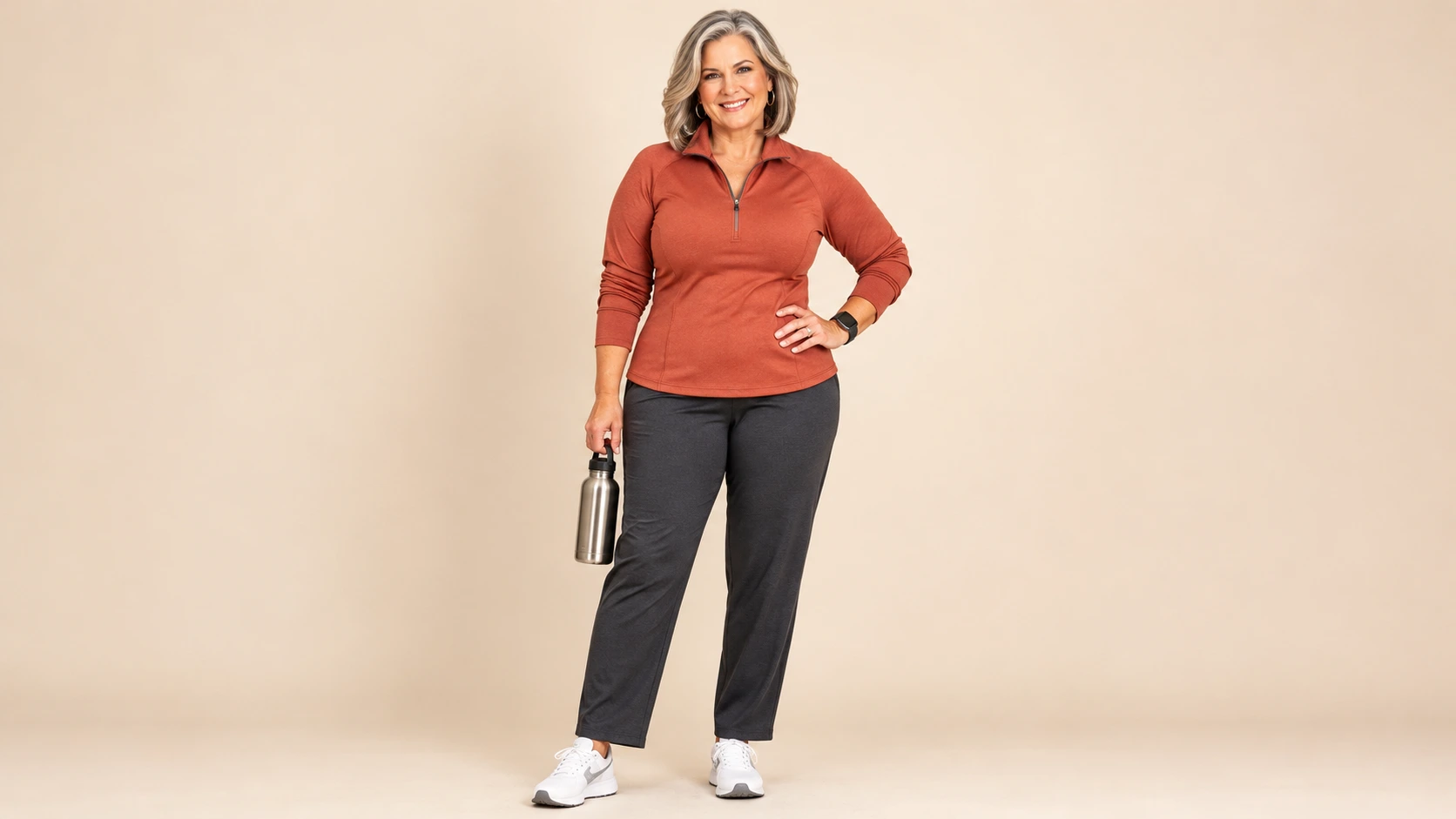
- A moisture-wicking top, or the closest thing you have
- Slip shorts or anti-chafe shorts for under a dress or pants
- A water bottle you can carry in one hand
- Your phone, for the timer
- A small notepad for next-morning notes
Book a five-minute check-in with your doctor before the first lap

After years without exercise, your doctor knows things about your heart, joints and medicines that no guide can. Call the office and ask for a short visit or a phone check-in.
Ask three questions:
- Is walking safe for me right now?
- Is there a pace or heart rate I should stay under?
- Do any of my medicines change how I should walk?
Write the answers in your notepad.
Stop Signs to Memorize
Chest pain or pressure, sudden dizziness, or trouble breathing that does not ease when you stop: stop walking and get medical help right away.
Test your old sneakers for a thumb’s width of toe room
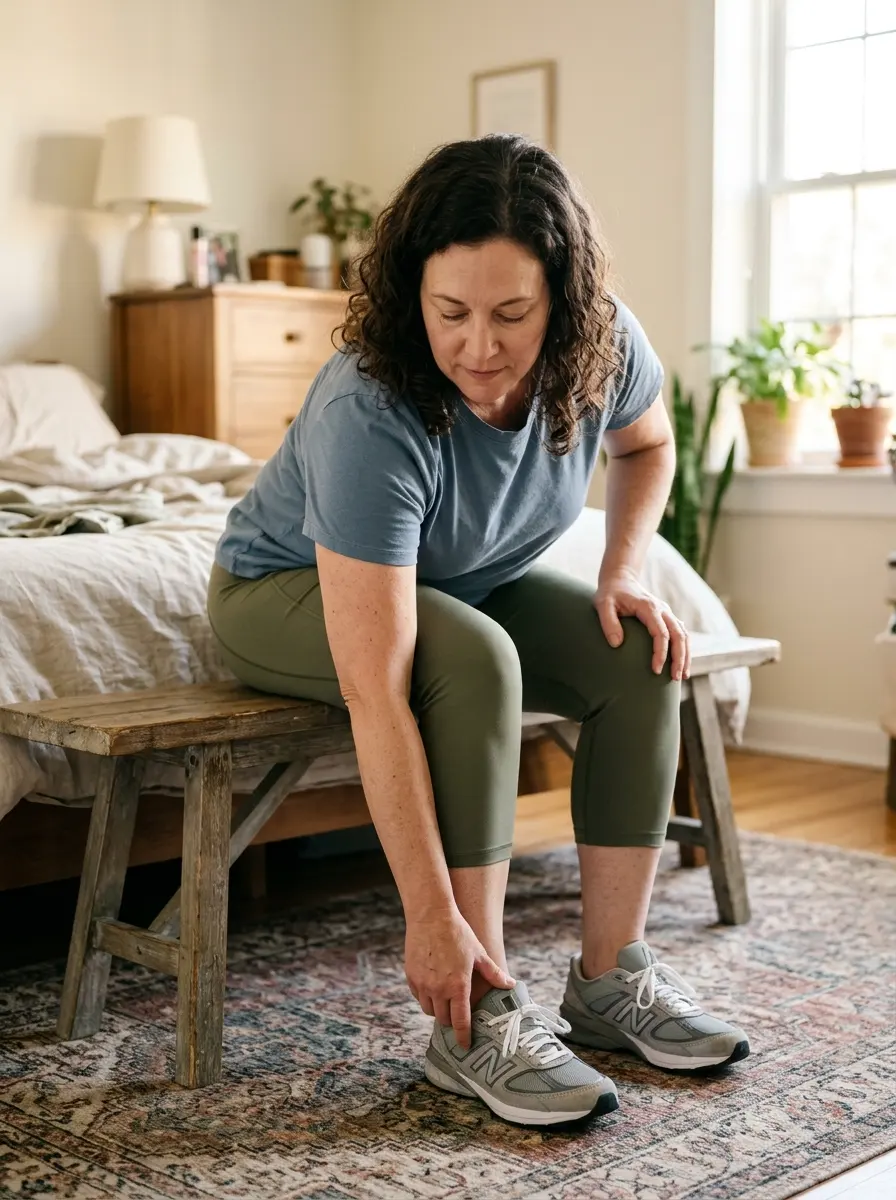
Old sneakers can look fine and still be wrong. Put them on with the socks you plan to walk in, stand up, and press your thumb down at the toe. You want about ½ inch of space between your longest toe and the end of the shoe.
Then press the sole. If it feels hard and flat, or the tread is worn smooth on one side, they are done.
Do Not “Break In” Pain
If a shoe rubs your heel or pinches your toes on day one, it will not get better on a longer walk. Swap them before you build a blister.
Swap cotton for a top and socks that wick sweat
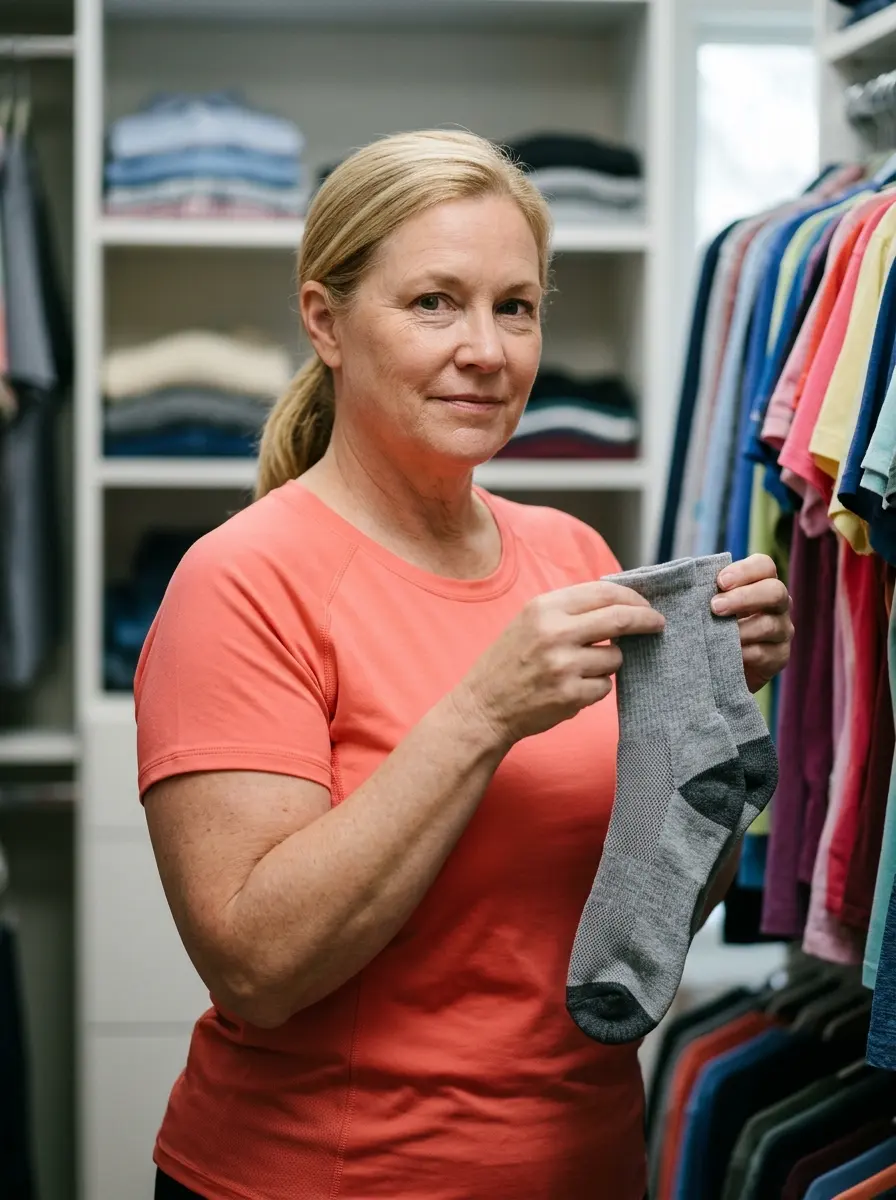
Cotton holds moisture against your skin, and wet fabric rubs. That is how a 10-minute walk turns into a sore underarm or a blister. Look for tags that say polyester, nylon or “moisture-wicking.”
For socks, choose thin synthetic or wool blends with no thick seam across the toes.
No wicking top yet? A loose, thin shirt you do not mind sweating in works for now.
Stop thigh rub before it starts, even under a dress
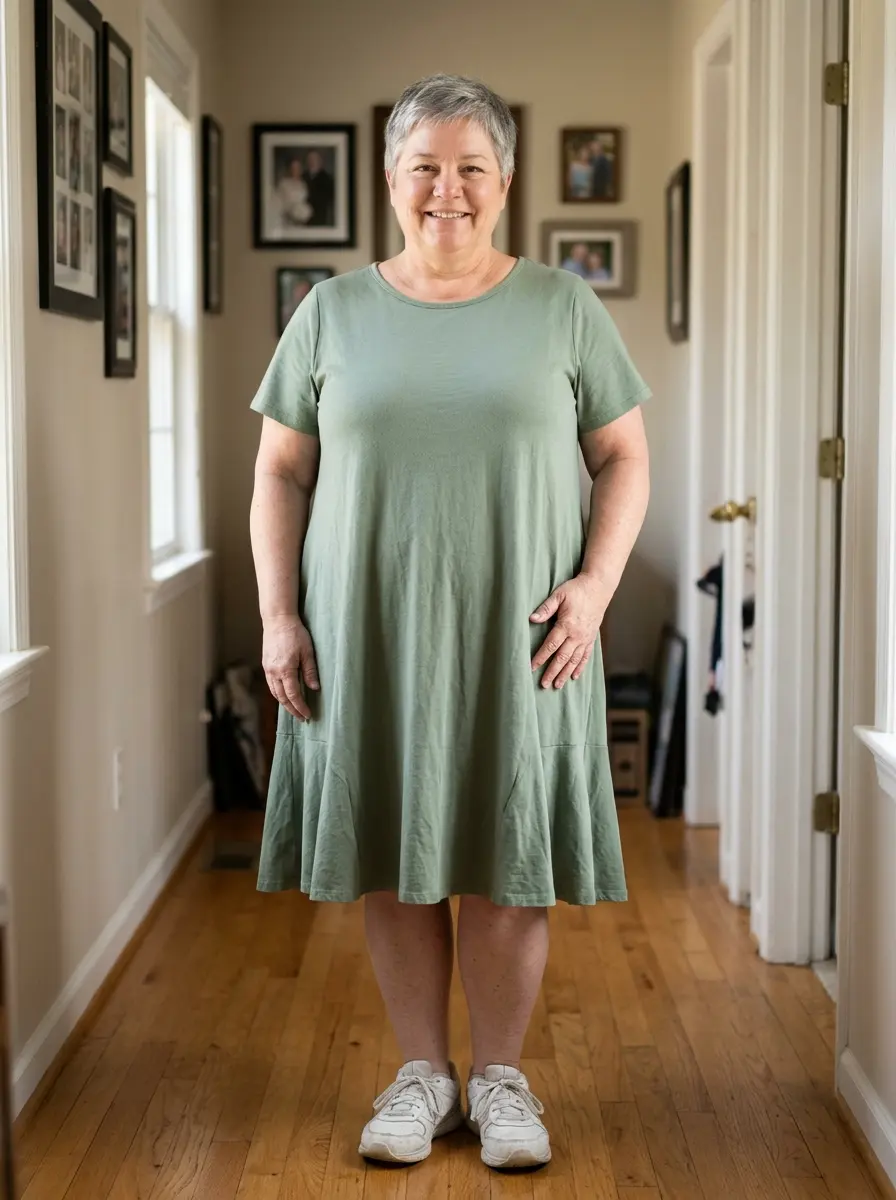
If your thighs touch when you walk, expect rubbing, and sweat makes it worse. Wear slip shorts or anti-chafe shorts that end mid-thigh under dresses, skirts and pants. Pick a waistband that lies flat and does not roll.
No shorts yet? Smooth an anti-chafe balm stick on your inner thighs before you leave, not after it stings.
Map a flat loop you can see from your front door
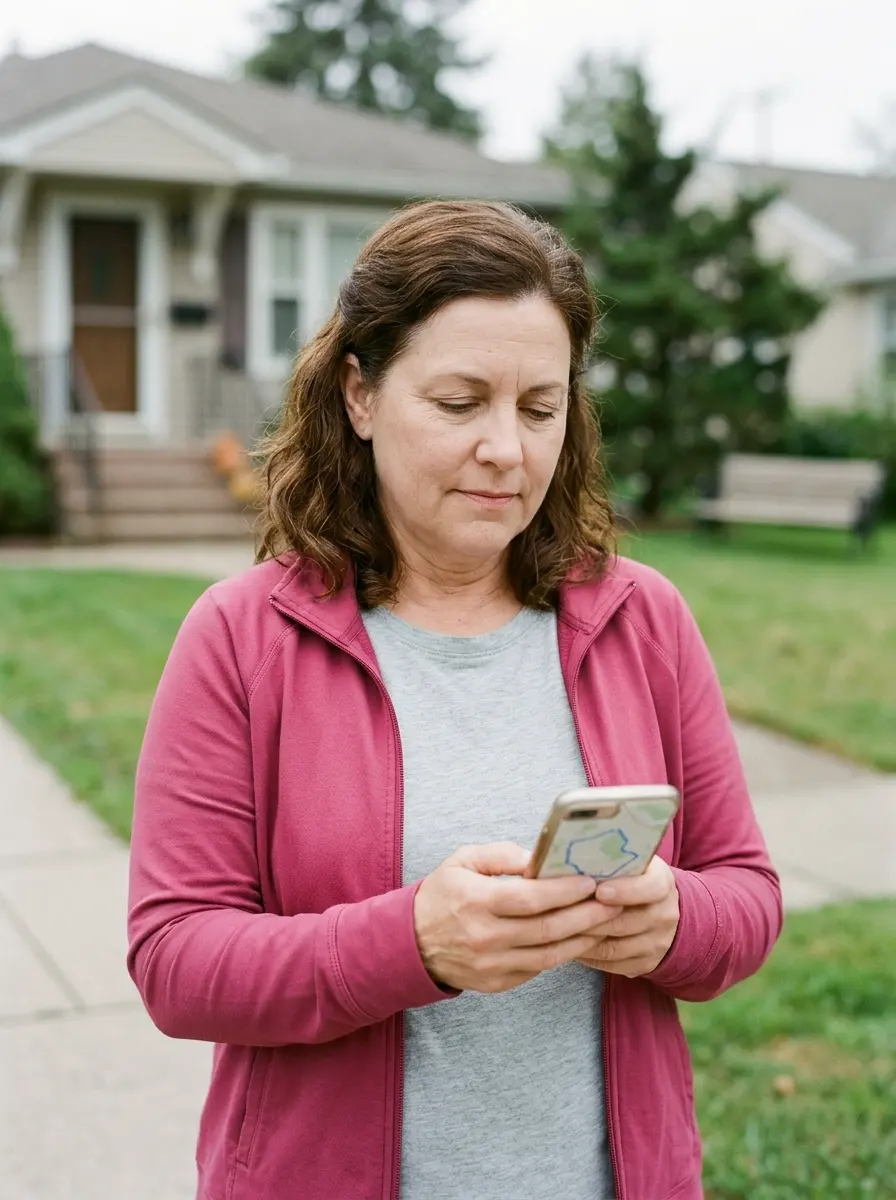
Aim for a route where 5 minutes of walking takes you away from home and 5 minutes brings you back. Flat matters because hills push your heart harder than you planned for in week one.
Close to your door matters because a short trip to the start line leaves fewer reasons to skip. Use your phone’s map to check the ground before you go. Look for:
- Even sidewalks with no cracks or loose gravel
- A bench or low wall near the halfway point
- Shade, if your walks fall in the afternoon
If the weather is bad or the street feels unsafe, a hallway, a mall or a school track works the same way.
Pick a Route With a Resting Spot
Knowing there is a bench halfway makes the walk feel safer, and that is often enough to get you out the door. You may never need to sit.
Start walking for health at 65 with a 10-minute out-and-back
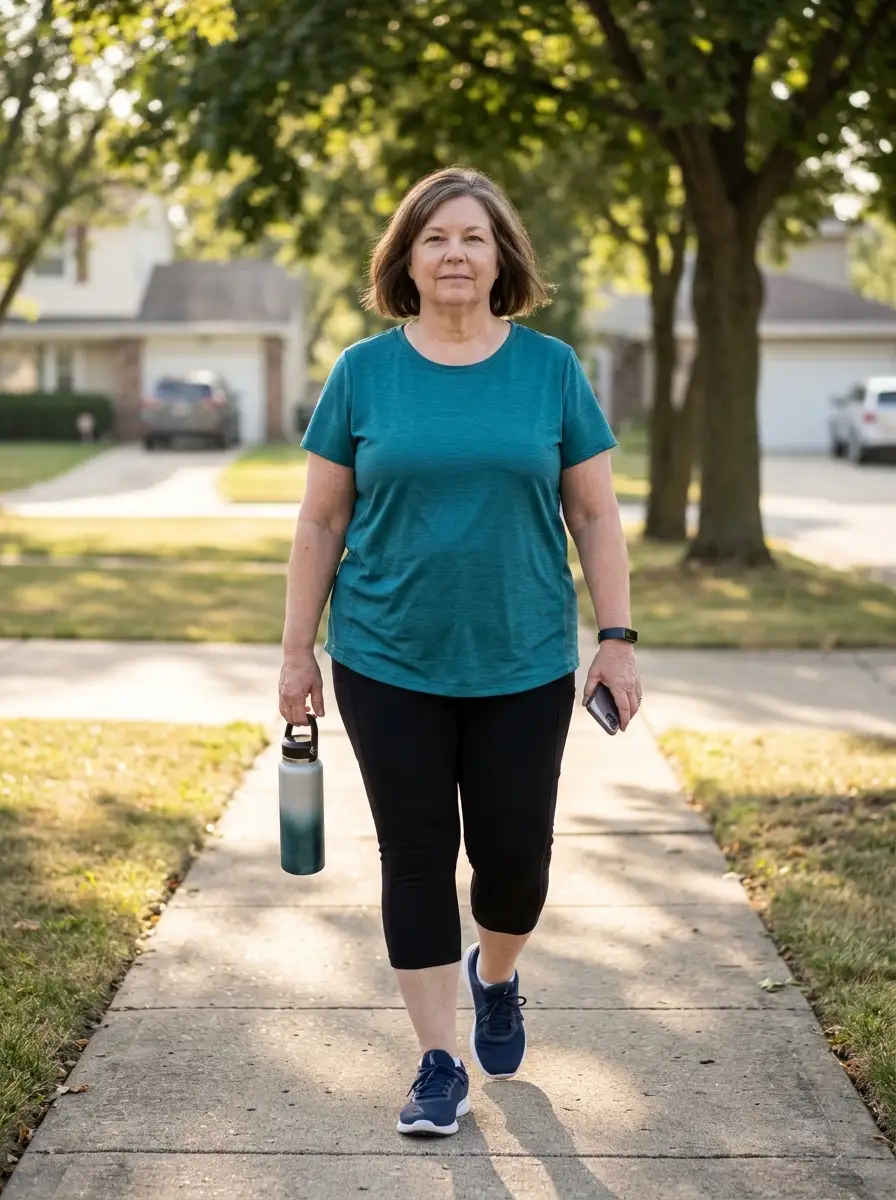
Turning around at the halfway mark is your safety net, because you always have as much left in the tank as you already spent. Set your phone timer for 5 minutes, walk away from your door at a slow, steady pace, and turn around when it chimes.
Then walk home. If 10 minutes feels like too much, begin with 3 minutes out and 3 minutes back and build from there. Starting small does not count as failing.
Use the talk test to set your pace

Say a full sentence out loud while you walk, like your street name and what you plan to cook tonight. If the words come out smooth, your pace is right. If you gasp halfway through, slow down until the sentence flows.
Singing a song should feel out of reach. If your doctor gave you a heart rate ceiling in step 1, follow that number over this test.
Borrow a Walking Partner
Call a friend or a grandchild on speaker while you walk. If the conversation keeps going, your pace is working.
Stretch both calves for 30 seconds after you stop
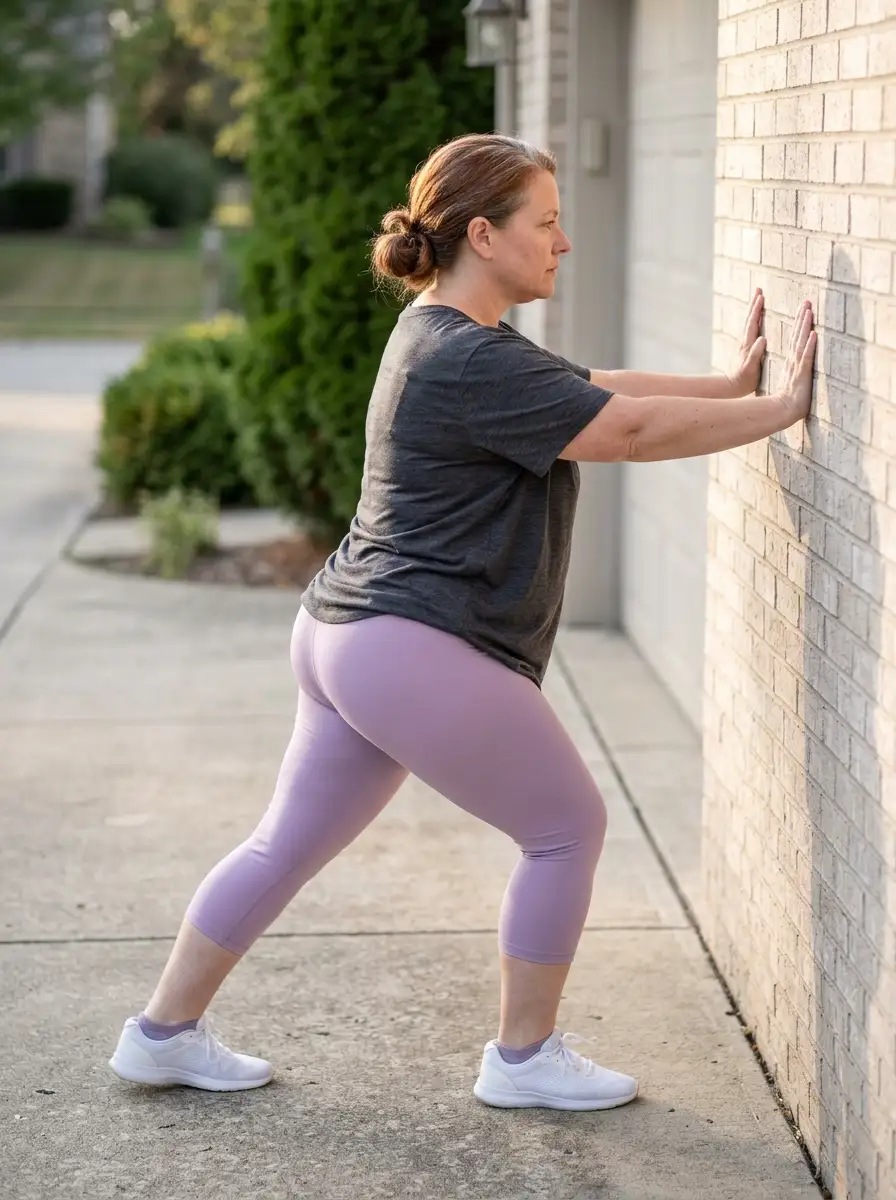
Cooling down is where tight shins and stiff ankles get a head start, so stretch right away while your muscles are still warm. Find a wall, a fence post or a sturdy tree, then:
- Place both hands on it at chest height
- Step one foot back, about 2 feet behind you
- Keep that back heel flat on the ground
- Lean forward until you feel a pull in the back calf
- Hold for 30 seconds, then switch legs
Bouncing can pull a muscle, so hold still and breathe. At home, a kitchen counter works just as well.
Check your feet, knees and hips the next morning
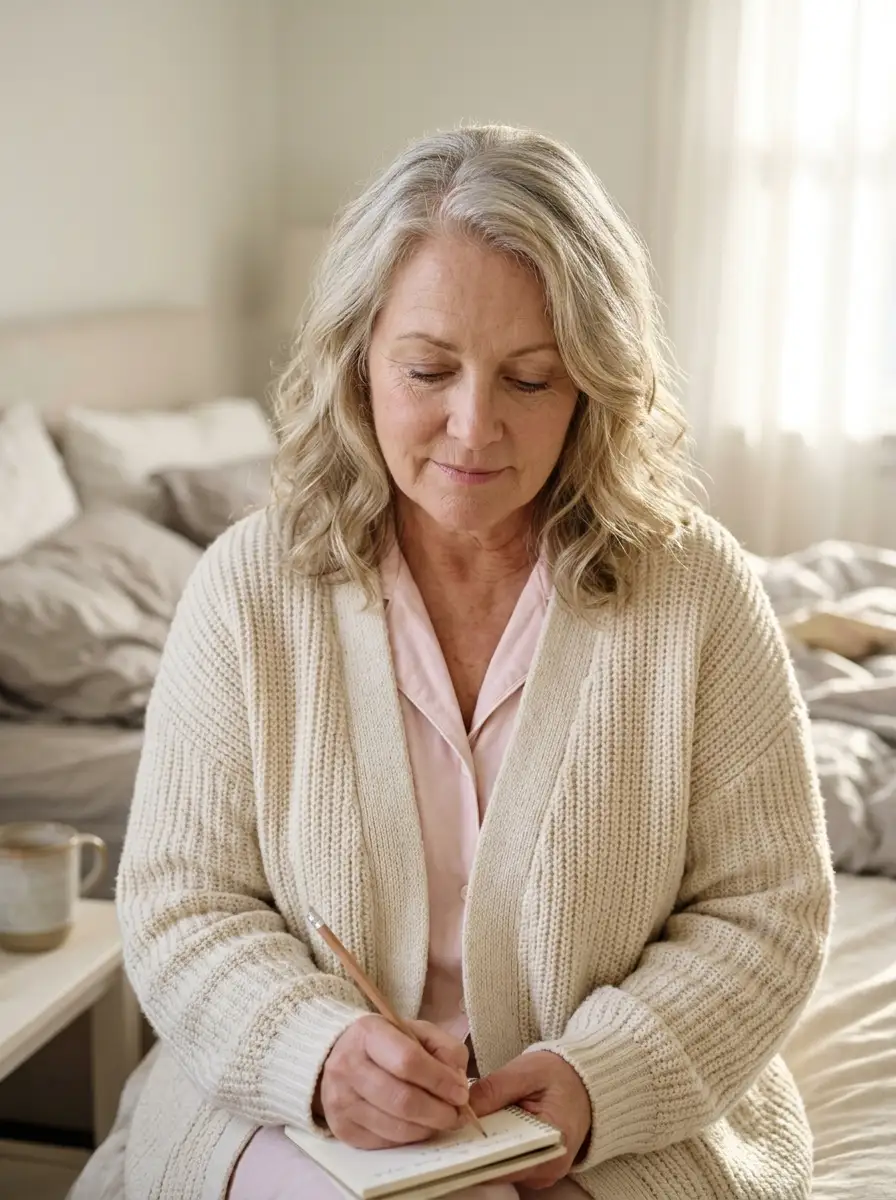
How you feel on waking tells you more than how you felt on the walk. Before coffee, stand up, take a few steps and write three words in your notepad: fine, tired or sore. Mild, achy tiredness in your legs is normal in week one.
Rest a day if you need it, then repeat the same walk length before you add time. Moving up while you are still sore is how people quit.
Sore Is Fine, Sharp Is Not
Sharp pain, swelling in a joint, or pain that does not ease after a day or two means rest and a call to your doctor. Do not walk through it.
Add 2 minutes every third day until you reach 30
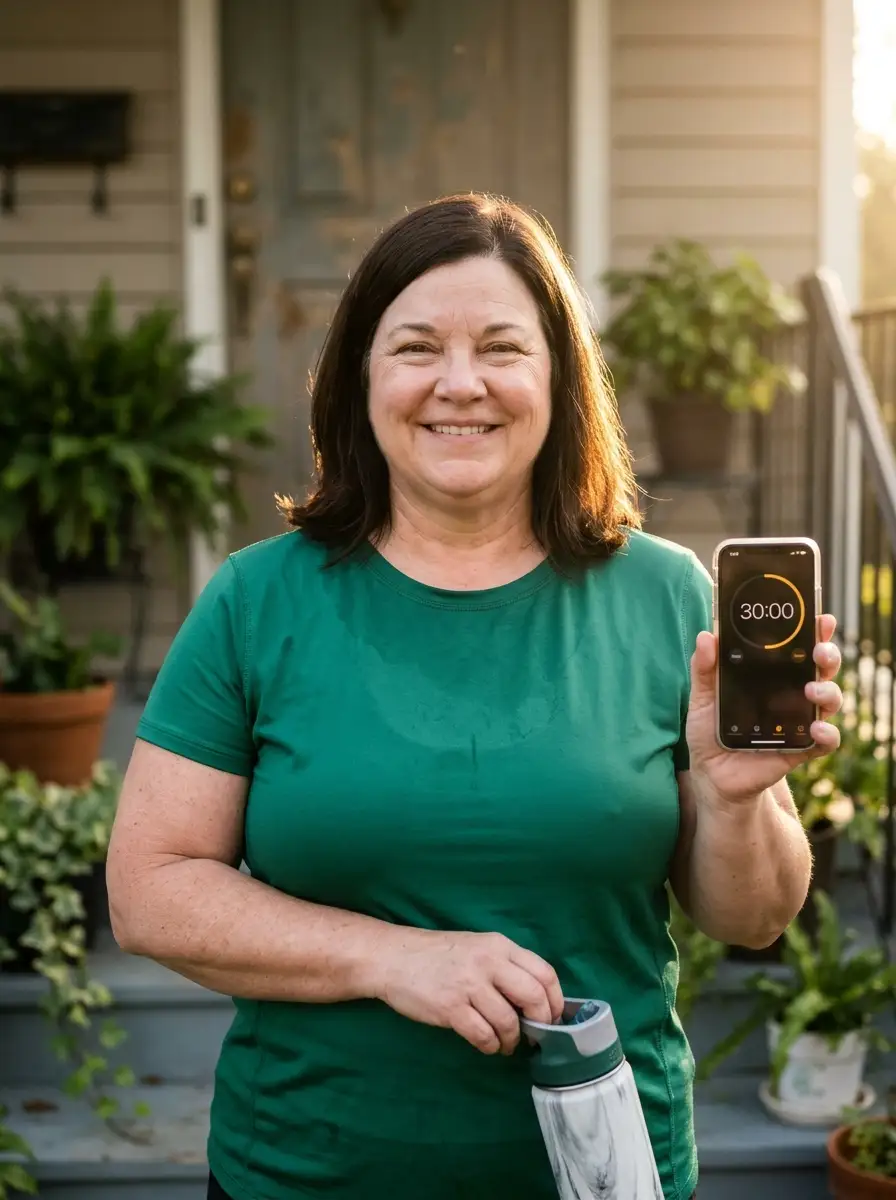
Adding 2 minutes every third day takes you from 10 to 30 minutes in about 30 days, which is the four weeks promised at the top. Only add time if your morning-after check said fine or tired.
If it said sore, repeat your current length until the soreness fades. Use a pencil on your notepad and write the new number next to the date. Skipping a week is okay, and you pick up where you left off.
Tie It to Something You Already Do
Walk right after your morning coffee or right before the evening news. A habit with a fixed spot in your day is much harder to forget.
Troubleshooting and FAQ
When Your Body Pushes Back, Try This
| If This Happens | Try This |
|---|---|
| Your shins ache on the front of your lower legs | Slow down, shorten your stride, and stay on flat ground. Hold your current walk length for 3 more days before adding time. |
| A hot spot forms on your heel | Stop and cover it with a blister bandage before it opens. Next walk, try a thinner sock or a different lacing, and check the shoe again. |
| A sharp pinch hits your side | Slow your pace and breathe out slowly and fully. Most stitches ease within 1 to 2 minutes. |
| Your waistband rolls down as you walk | Switch to a wide, flat waistband that sits above your belly. If you pull it up every few steps, the pants are not right for walking. |
| Your knees feel stiff the next morning | Repeat the same walk length without adding time. If the stiffness lasts more than a few days or comes with swelling, call your doctor. |
| You are out of breath in the first 2 minutes | Cut your pace in half and run the talk test again. If it happens every walk, mention it to your doctor. |
Questions New Walkers Over 65 Ask:
Can I use a treadmill when it rains?
Yes. Keep the speed low and hold the handrails lightly if you need balance. Do the same 10-minute start and the same talk test.
Should I walk with poles or a cane?
If you already use one for balance, keep using it. Ask your doctor or a physical therapist before you add walking poles, since the right height matters.
How much should I spend on walking shoes?
Fit matters more than price. Try shoes on late in the day, when feet are a little swollen, with the socks you walk in. Leave about ½ inch at the toe.
What if I miss a week?
Restart at a length that felt comfortable, even if that means going back to 10 minutes. Your plan is a ladder, and you can step back down a rung.
Is morning or evening better for walking?
Pick the time you will keep. If your joints feel stiff first thing, an afternoon walk may feel better. Warm up with 1 minute of slow steps whichever time you choose.